
Our Bachelor of Science in Interior Architecture prepares you to design functional, sustainable, and deeply human-centered spaces. Working in dedicated studios with experienced faculty and community partners, you will tackle real-world spatial challenges through an interdisciplinary lens. This four-year professional program blends technical skill with business insight—equipping you to design boldly and create resilient environments that enhance both individual well-being and social equity.
Accredited by the Council for Interior Design Accreditation (CIDA), our program prepares you for a dynamic professional practice, creating spaces that meet today’s needs while anticipating tomorrow’s challenges.
Coursework
What you'll study
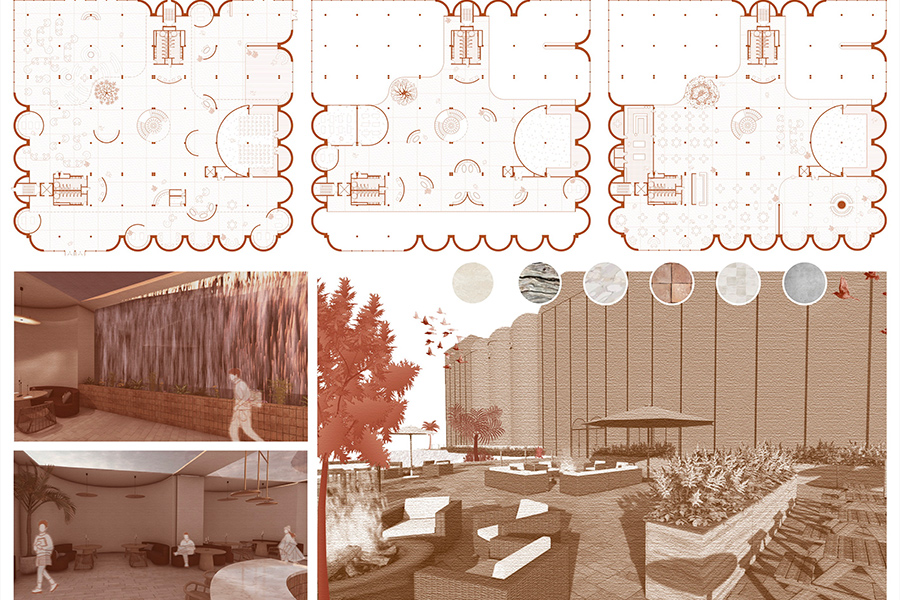
As an Interior Architecture student, you’ll integrate art, sustainability and business within a highly creative and rigorous curriculum. You’ll study design theory, history of interiors, materials, lighting, and building systems while developing strong technical skills in sketching, rendering, computer-aided design and 3D modeling.
Coursework combines social sciences (how people interact with their environments) with physical sciences (how materials affect health, safety and comfort). Studio courses emphasize design thinking, communication and real-world problem solving.

Learn from experts
At the School of Human Ecology, you’ll learn from experienced Design Studies faculty who bring professional practice and research expertise into the studio. Faculty mentor students through hands-on design experiences ranging from furniture-scale projects to full residential remodels and commercial environments.
Internships further expand your learning, offering insight into professional practice and industry expectations.
Creative learning spaces
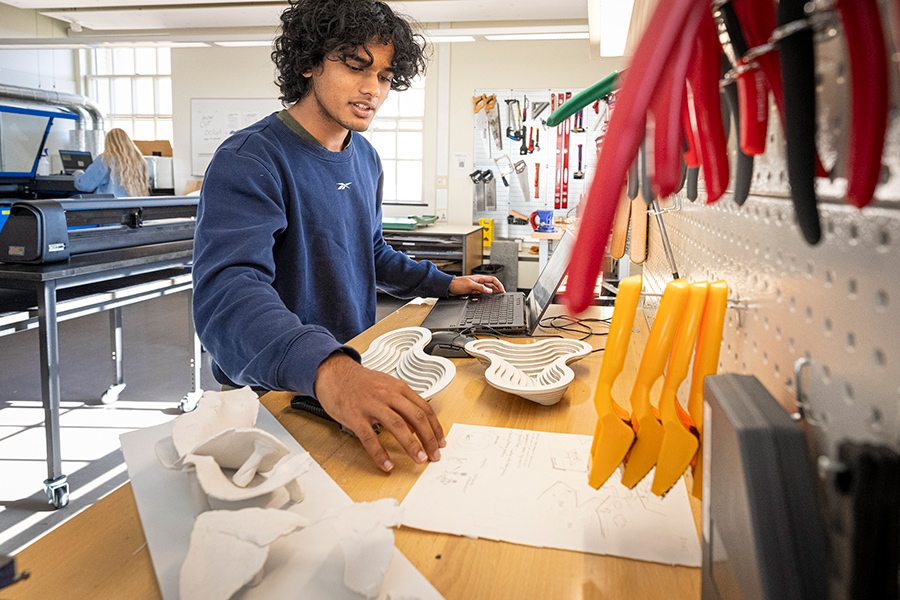
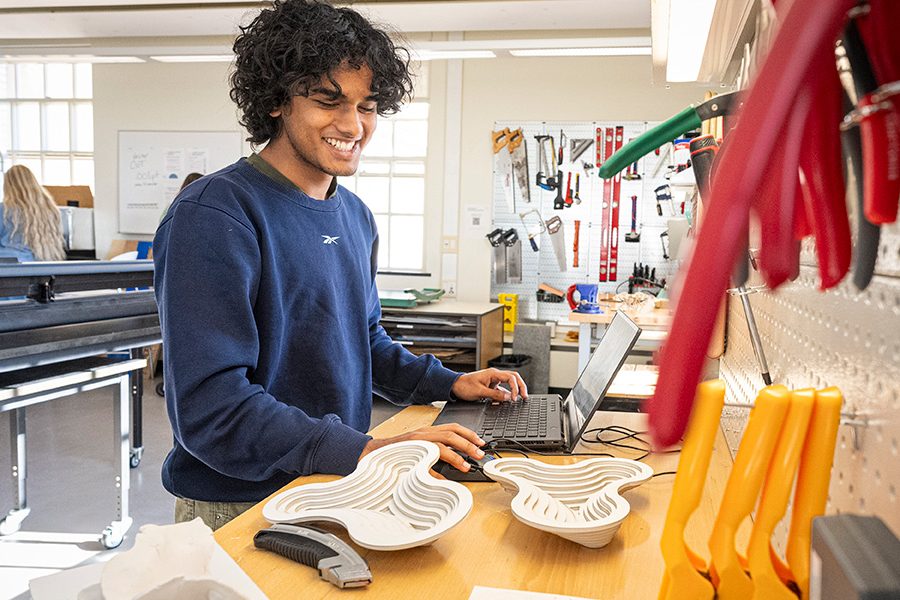
Interior Architecture students work in dedicated studio spaces designed to support creative collaboration and technical exploration. Facilities include a Fabrication Lab, resource library, lighting demonstration areas and computer labs that support drafting, modeling and visualization.
The program is structured in two phases. After admission to phase two, students deepen their focus on advanced studio work and professional preparation, culminating in a required portfolio prior to graduation.
Showcase your work
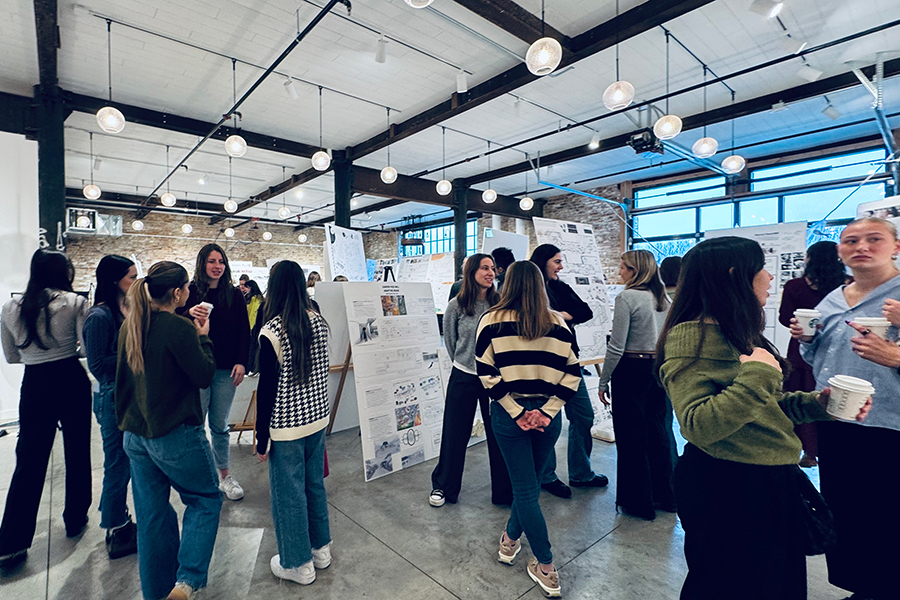
Throughout the program, studio courses emphasize real-world design projects and professional presentation skills. Before graduation, you will develop a comprehensive portfolio that demonstrates your technical expertise, creative process and readiness for professional practice.
Graduates are prepared to sit for the Council for Interior Design Qualification (NCIDQ) exam and enter the profession with a strong and competitive body of work.
Careers
As a result of extensive professional preparation both in- and out-of-the-classroom, our Interior Architecture graduates are highly sought after in the industry and land roles as interior designers, design consultants, & project managers. Many go on to successfully launch their own independent design firms, while others secure positions at local, national, and internationally recognized design and architectural firms including: Gensler, EUA, Erdman, Henricksen, Lerdahl, Flad, Perkins Eastman, Kahler Slater, & SmithGroup.
Careers in Interior Architecture
Interior Designer (Residential, Commercial, Healthcare, or Hospitality)
Design Consultant
Design Engineer
Project Manager
Visual Merchandiser
Graphic Designer
Stay Connected
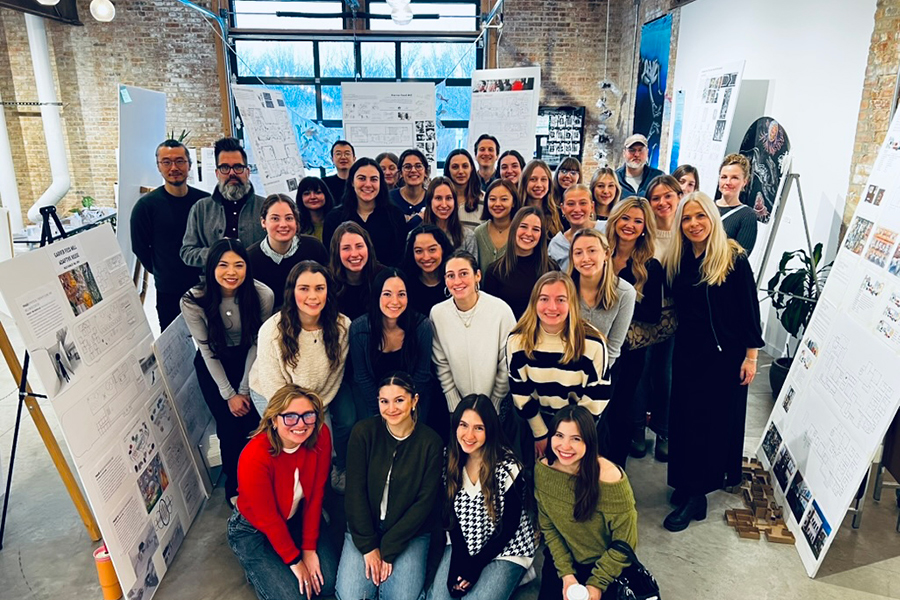
Keep up with what students and faculty are up to Human Ecology by following the school's Instagram account.
Student & Alumni Stories
The following section includes a carousel of 4 stories. You may advance through the carousel by clicking on the buttons below.


Interior Architecture Resources

Professional Associations
