
Story by Sofia More x’26, UW–Madison student studying Community & Organizational Development
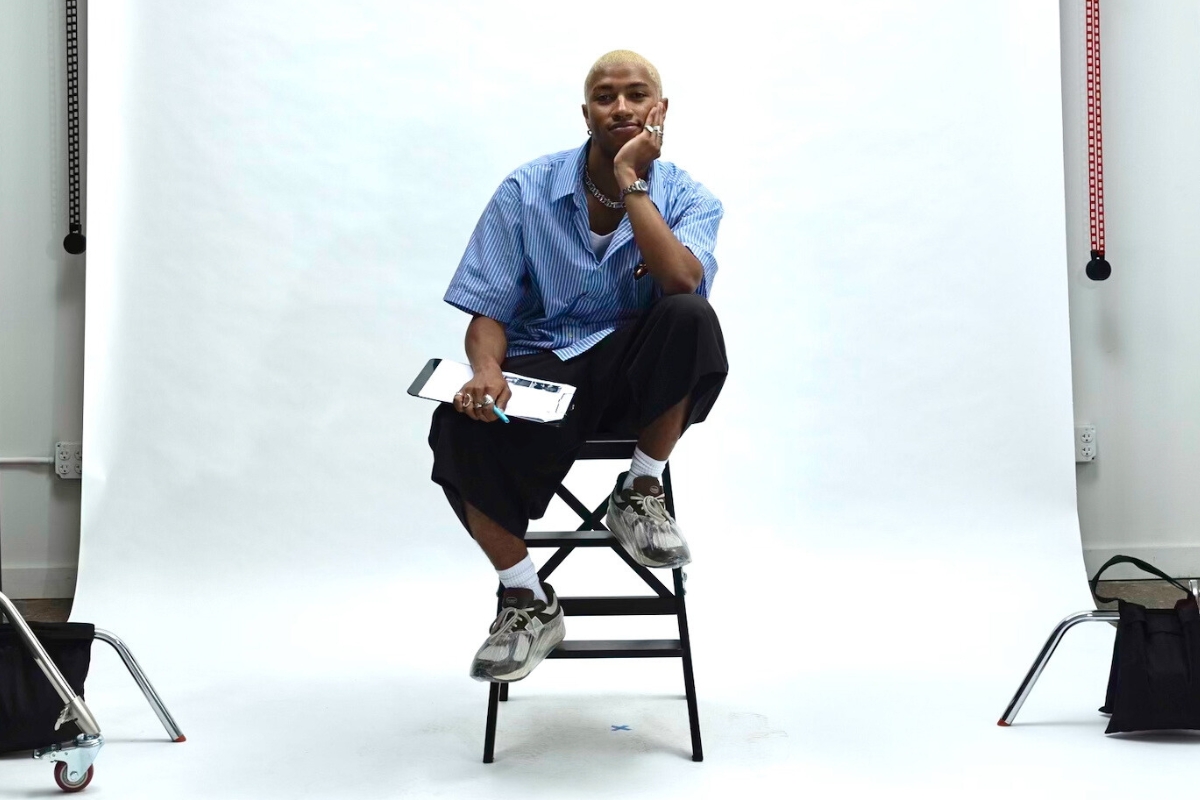
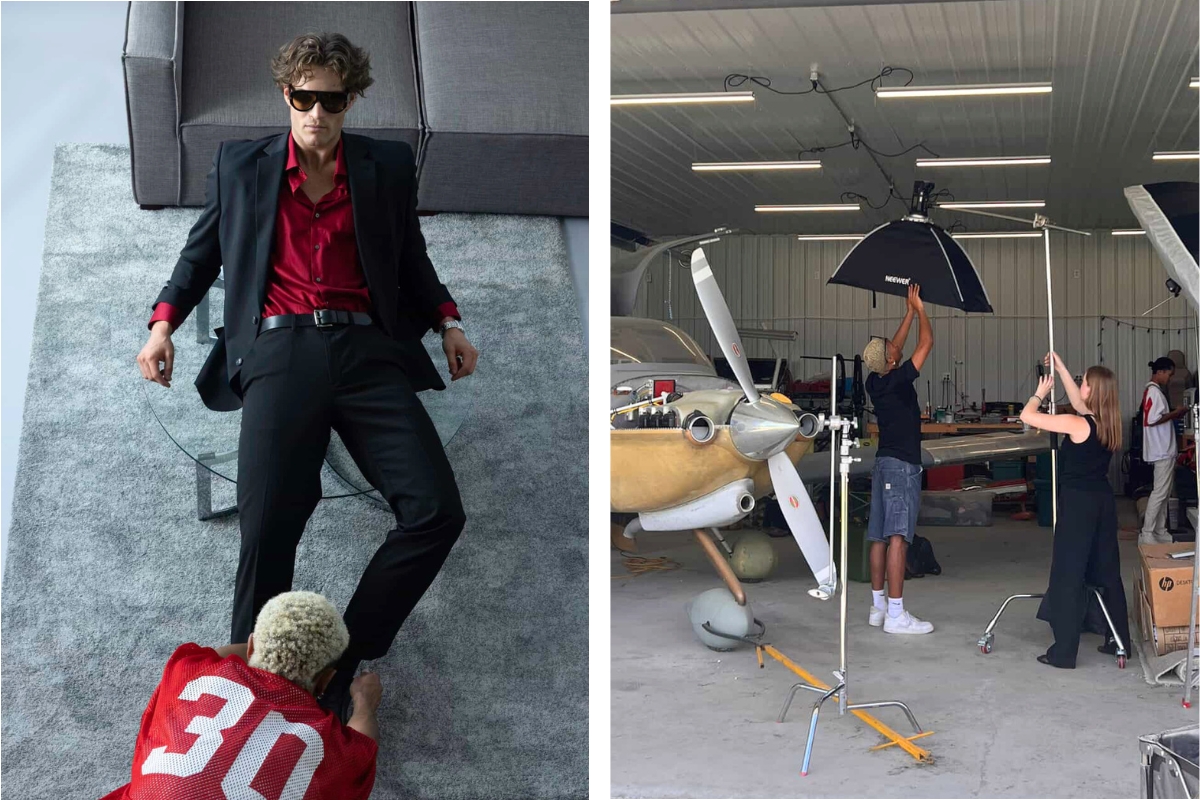
Since age 14, Grantham (G) Green x’27 has been involved in the fashion scene. Originally starting off in modeling, the visual powerhouse has since evolved into one of the most-watched students on campus — starting their production company Pandemonium Productions and collaborating with fashion brands like ASICS, HIDDEN, August, Delinquents Truly and more.
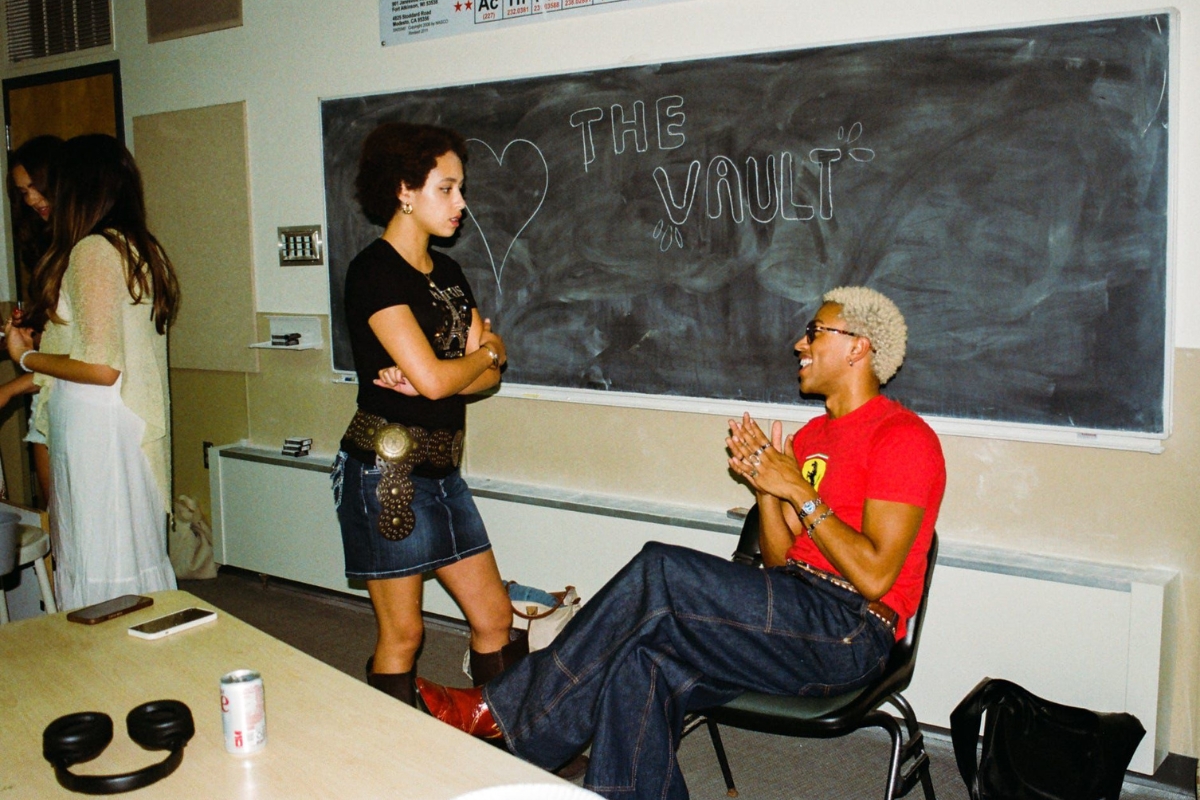
Recently, Green announced their role as the fashion show creative director at The Vault — a UW–Madison student organization that offers fresh perspectives on the fashion industry, emphasizing its fusion with business, technology and creativity. Green will direct The Vault’s upcoming show, Definitive ACT III; GLORY AND GORE.
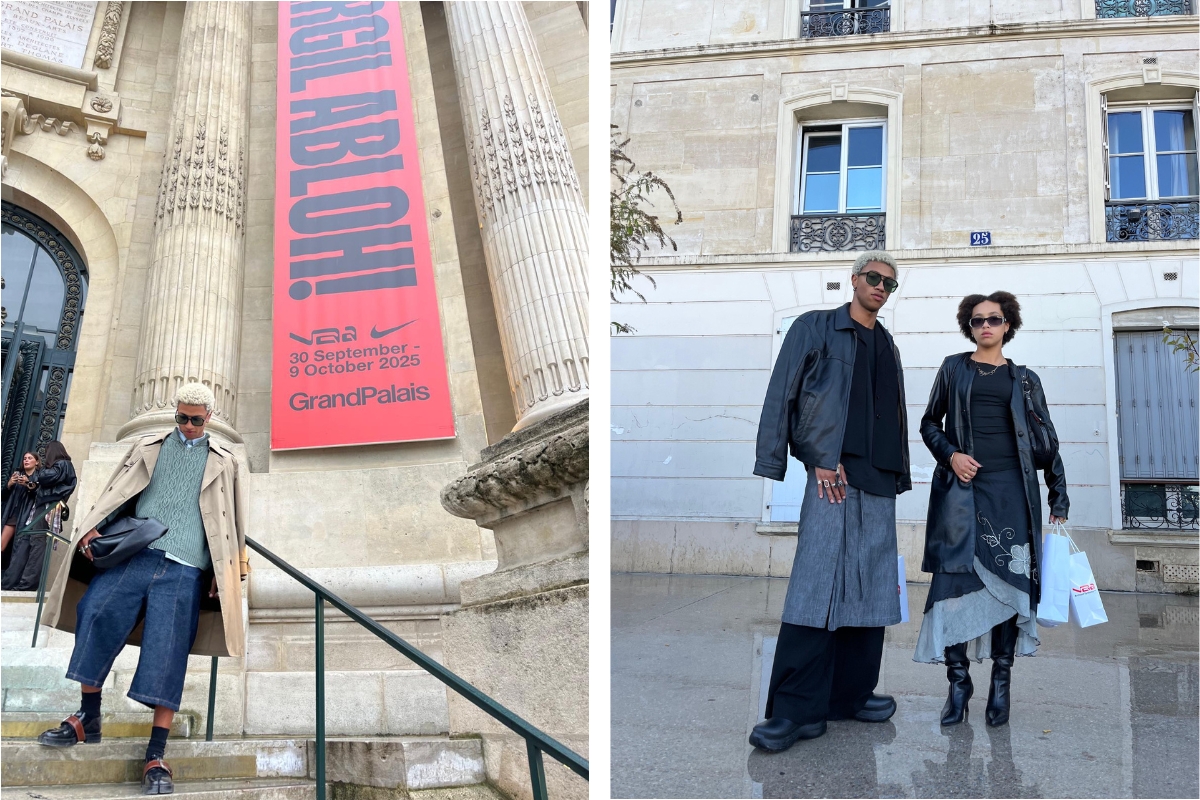
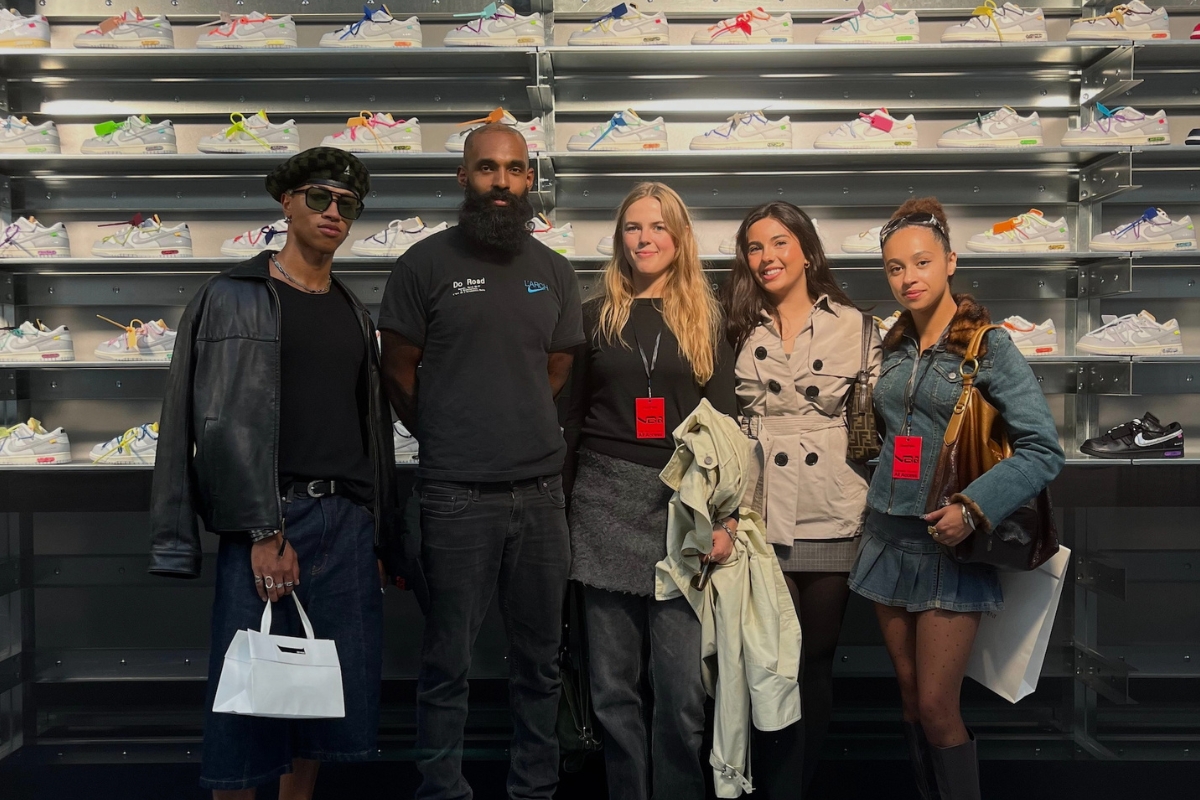
The Virgil Abloh Foundation selected The Vault as its Youth Impact Partner. Through this pivotal partnership, Green and three other student leaders traveled to Paris to visit The Codes, the first major European exhibition exclusively devoted to the work of UW–Madison alum Virgil Abloh ‘03, exploring nearly 20 years of his multidisciplinary practice through the lens of the 20,000-object Virgil Abloh Archive.
I sat down with Green to discuss their journey as a Design, Innovation & Society student, visiting The Codes and what it means to be a human ecologist.
More: Okay, will you tell me more about your decision to switch majors from Consumer Behavior & Marketplace Studies [CBMS] to Design, Innovation & Society [DIS]?
Green: Yeah, so when I first entered college, I started off majoring in linguistics. I quickly realized that wasn’t the route I wanted to go down.
I was just starting to get into the idea of fashion, the fashion workplace and what goes into all the backside planning. I knew that I wasn’t super interested in the actual designing — I was looking for a more holistic understanding of working in the fashion world. So that’s what made me initially switch majors to CBMS. However, I quickly realized that I was looking for a major where I could see the physical outcomes of my creations.
And that’s when I met with my advisor, Amy Bertrand [School of Human Ecology academic advising assistant director], about the Design Studies certificate option, and she was like, “Well, surprise! There’s a new major.” She walked me through three different pathways, and I just felt super connected to even the idea of the DIS major. As a DIS student, I’ve been able to apply design concepts in my own way, which is what I was really drawn to about the program.
More: Is there a specific class that has been your favorite or that you feel stands out to you?
Green: Absolutely — I would say there’s two. One conceptual, one practical. The conceptual one was Design Studies 264: Dimensions of Material Culture with Professor Sarah Anne Carter [Chipstone Foundation Design and Material Culture Chair, associate professor of Design Studies, executive director of the Nancy M. Bruce Center for Design and Material Culture]. She is one of the most intelligent, brilliant people I’ve ever met. I could listen to her lecture all day. In the class, we learned about the histories and stories of objects, and the ways in which we engage with the materials around us.
That class was amazing and opened my eyes the most as a human ecologist. I evaluated how we engage as humans with our environments and the things that we love, and the things that we don’t love. I gained a new perspective on material culture that restructured the lens in which I interact with the world around me.
As for the more practical class, Design Studies 140: Visual Thinking – Form and Space was an amazing class taught by Brooke Godfrey [Design Studies teaching faculty]. That class went over every design basic that you could think of. It started with simple line drawings, and by the end, we were working in 3D modeling. The class reestablished my foundation as a designer, and I got to work with tools and platforms that are common in the workplace. Human Ecology does a great job introducing these tools to you and preparing you to continuously use them.
More: How do you feel like you’ve been able to find your community within the school?
Green: I would say the school is like a little family. What’s really nice about the school is that it feels like a pocket of a community within a large campus. Every time I step into Nancy Nicholas Hall, I’m just like, “Hey, hello, hey, hey!” You just see everyone, you know everyone, you spend so many classes with the same people.
The community is so strong, even across departments. Although I’m not a Textiles & Fashion Design student, I love hanging out in the sewing studios. There’s so much to talk about. There’s so much to engage with. I want to know what everyone is doing. They want to know what I’m doing. The cross-collaboration that happens within those rooms outside class is what’s so important. SoHE [School of Human Ecology] is such a collaborative space that’s unlike anywhere else I have found on campus.
More: Were there any classes that you took at the School of Human Ecology — or were there any experiences at the school — that when you were in Paris or when you were setting up this fashion show, you thought “Wait, I learned about this”?
Green: It was a really surreal experience to see The Codes through the lens of what I learned in my material culture class — knowing the stories behind these objects, knowing that they’re not just ‘shoes on display,’ and what it means to have prototypes. It was incredible to learn about the stories and messages within early designs that the world never saw, and to consider what story they tell in tandem with the whole.
Through planning for this upcoming fashion show, a lot of skills I learned in Design Studies courses were put to use, such as storyboarding and creating mood boards, which are the foundation for creative ideation. Learning how to organize my creative thoughts visually is crucial. Courses like Design Studies 220: Design Fundamentals II propelled and helped me find ways to communicate what I’m thinking through design. As a designer, you can have a good idea, but if you can’t communicate it, what’s the point?
More: Clearly, you’re doing something right. You’ve got all of these amazing experiences under your belt. Is there any advice you have for current or future DIS students?
You have to burn your own path, but you don’t have to do it alone. There are resources, there are people, there are friends and there’s faculty who all want to support you. Sometimes I think they want me to succeed more than I do because they are so supportive. The sooner you realize that creating your path is not something you do alone, and it can be inside your community, is when you really start to flourish.
And that’s what I’ve learned working on The Vault’s fashion show. If you have a great idea, think it’s super cool, how do you share this with the larger community? And then how do you continue to shape it to include that community and to really bring them together and let them see themselves in what you’re creating? Because it’s now a group effort. You have people standing by your side, you have people rooting for you, and you’re just continuously exploring that path for yourself.
More: Last question. What does it mean to you to be a human ecologist?
Green: To continue to approach everything I do with the intention to lift others. To give voice to others. To keep the human experience, human thoughts and feelings, at the forefront of my mind as I move through creative work.
That is what it means to be a human ecologist — to view the world holistically and to create community.
Definitive ACT III; GLORY AND GORE will have two showings on Sunday, Dec. 7, 2025, at 2 p.m. and 5 p.m. The show will be at The Tinsmith, 828 E Main Street, Madison, WI. Reserve your spot here.
_________
The generosity of alumni and donors opens doors for students to pursue unique hands-on learning opportunities. G Green and Vesa Ljumani received the Career & Leadership Development Scholarship — which is made possible by gifts to the School of Human Ecology Annual Fund — to visit an exhibition in Paris devoted to the work of Virgil Abloh ’03, one of the 21st century’s most influential designers.