
More than 600 Human Ecology students entered into alumnihood at spring commencement — joining our growing network of 17,000 alumni. Before earning their diplomas, the following notable grads created art, founded student organizations and deepened their connections with communities in Madison and abroad. Nominated by the school’s faculty and instructors, these notable grads exemplify the spirit of being human ecologists.
Sarah Ambrosius, Textiles & Fashion Design
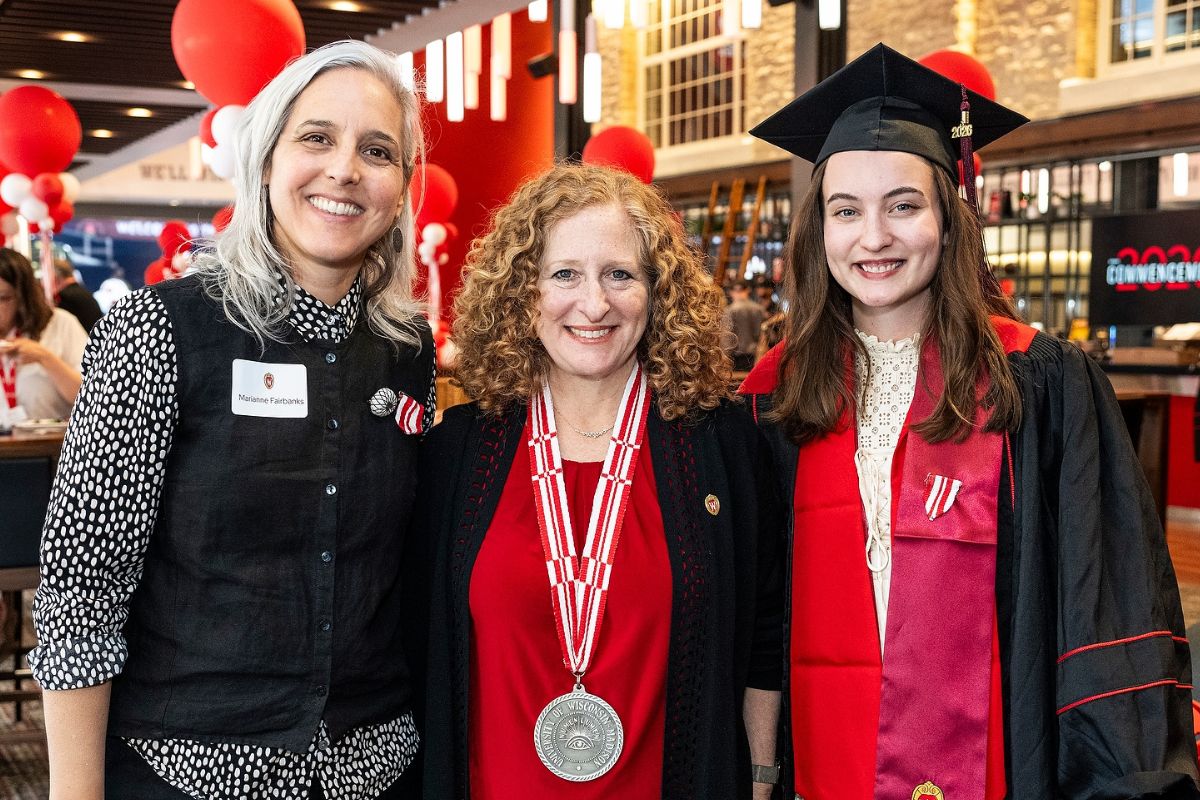
When the Office of the Chancellor requested an updated commencement ribbon, professor Marianne Fairbanks reached out to Sarah Ambrosius ’26 who was up for the challenge. Ambrosius set out to design a bold red and white weaving that would look good close up and from a distance, in order to stand out to graduates and attendees at Camp Randall. It also needed to be strong enough to hold a large medallion, which was cast by two College of Engineering students.
The handwoven ribbon is a striking double weave block pattern made of two layers of cloth, woven into a tube. Chancellor Jennifer Mnookin wore Ambrosius’ design at spring 2026 commencement ceremonies, and the ribbon will continue to be worn by future UW–Madison chancellors.
Sara Bannantine, Human Development & Family Studies and psychology
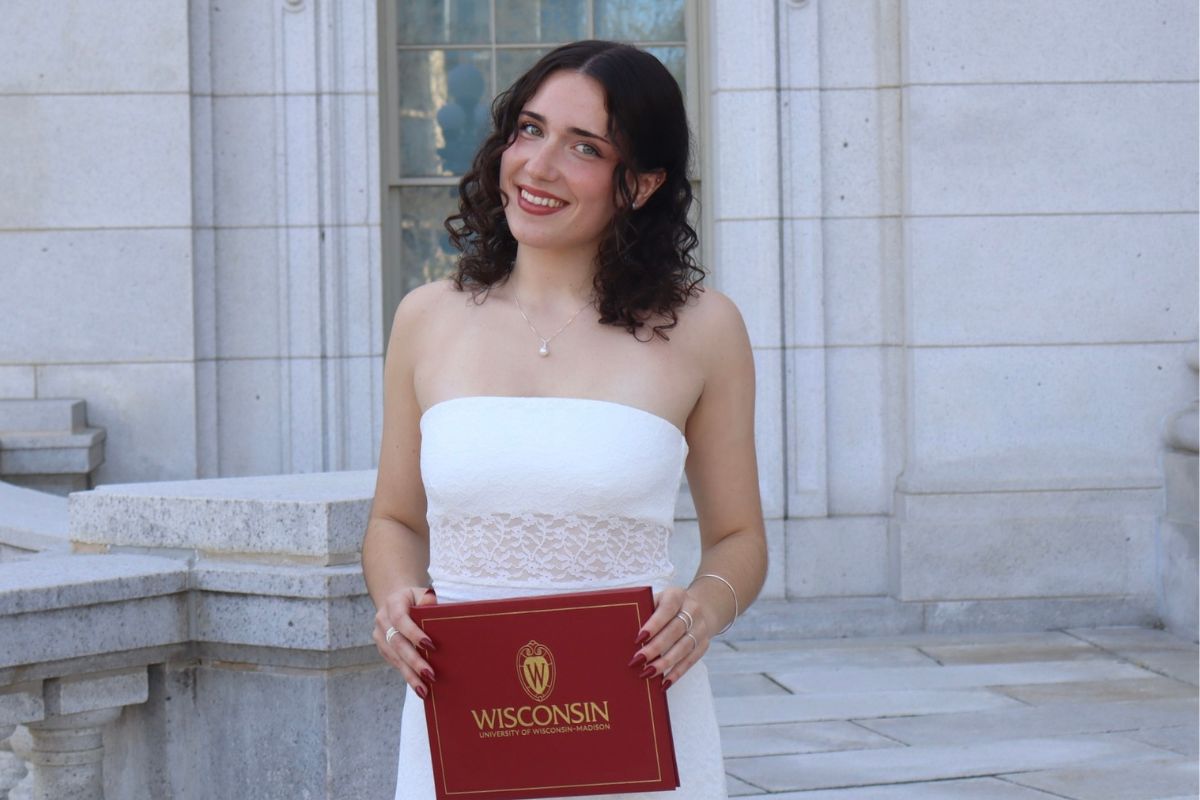
As a research assistant with the Cariño Lab, Sara Bannantine ’26 coded bilingual Spanish-English interviews. It was a crucial step in exploring how immigrant Latine parents discuss emotions in oral stories that they share with their pre-school-age children. Bannantine brought these learnings to a wider audience when she presented at the UW–Madison Undergraduate Research Symposium.
Bannantine is a deep thinker, engaged learner and passionate about immigrant children’s experiences. She helped develop a grant for a study on immigrant college students’ mental health and belonging. After graduation, she plans to continue her involvement with research.
Morgan Beyer, Personal Finance
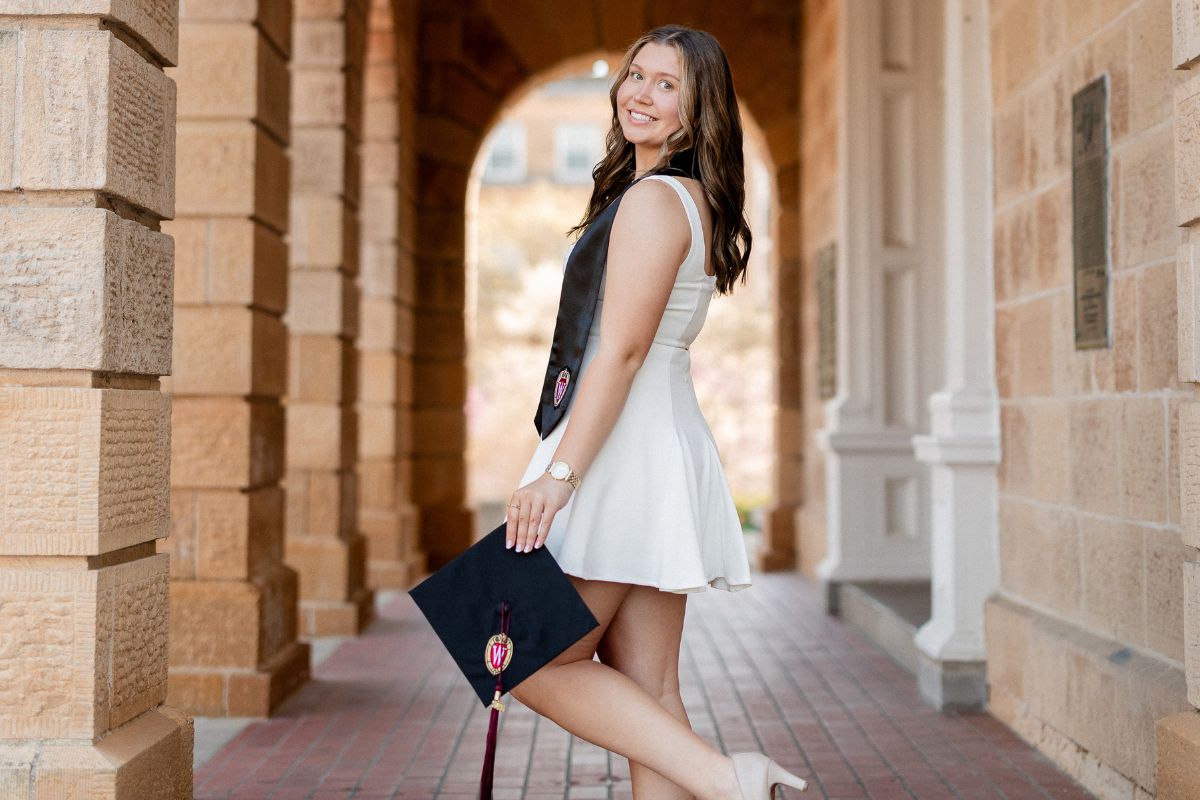
The student organization that Morgan Beyer ’26 founded was named UW–Madison’s Best New Student Organization at the Bucky Awards. InvestHer makes financial education more accessible for women and underrepresented students.
Through leadership, service and saying “yes” to opportunities, Beyer helped peers build confidence in their financial futures. “One thing I’ve learned is that confidence doesn’t come from before you start; it comes from doing,” Beyer says. “That’s something I hope more students, especially women, can take with them when it comes to money, careers and leadership.”
UW–Madison named Beyer among 14 notable grads recognized across all schools and colleges. This campus-wide honor celebrates outstanding graduating students who made a lasting impact during their college journey.
Mireya Esparza, Community & Organization Development
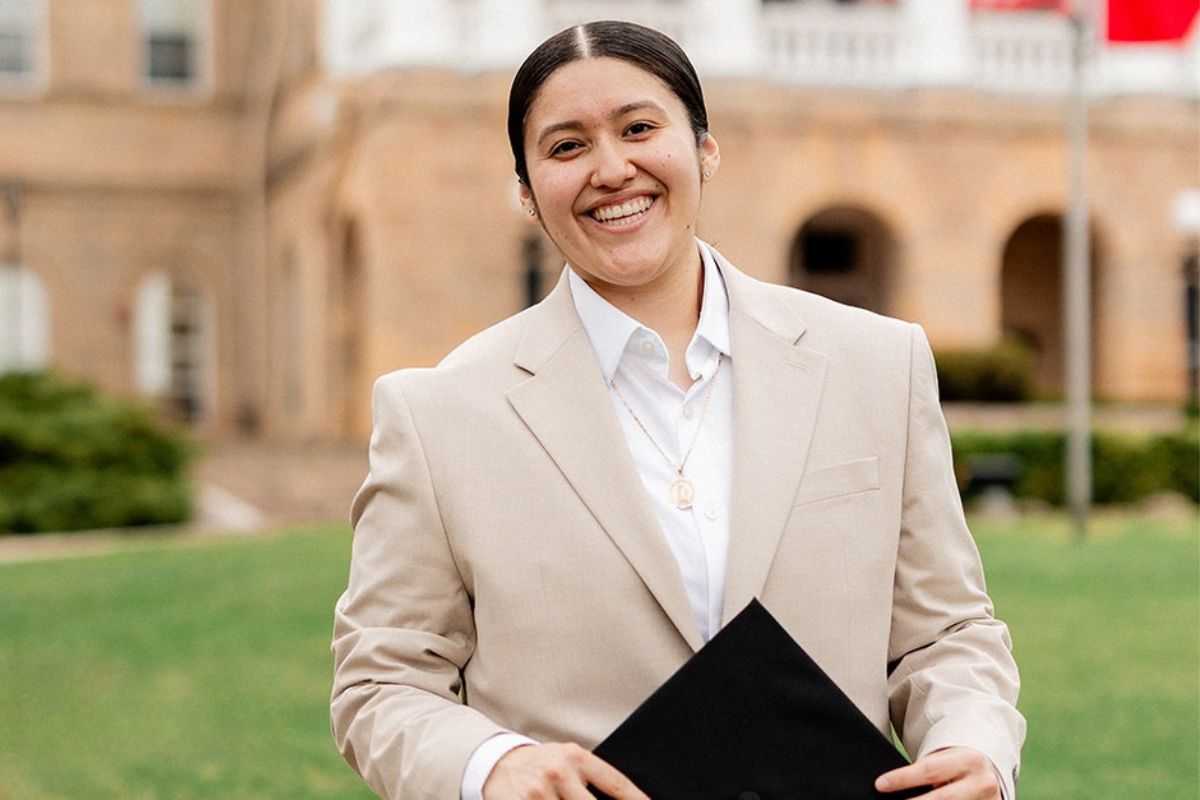
Human Ecology named Mireya Esparza ’26 the school’s flag bearer for spring 2026 commencement at Camp Randall. Esparza worked as an outreach and engagement intern for the school’s Center for Community and Nonprofit Studies (the CommNS), where she found a special community with faculty, staff and fellow students.
Being involved on campus with the CommNS, as co-president of the Association of Latino Professionals for America and the academic and professional development chair for the UW–Madison Latine Student Union, Esparza used her voice and experience to grow connections with peers and create inclusive spaces for mentorship, professional development and leadership.
Sofia More, Community & Organizational Development

For the past three years, Sofia More ’26 worked as a student assistant and intern for the School of Human Ecology’s Advancement & Communications team. She ideated and created fun, impactful content, including web stories, social media posts and philanthropy materials that showcased the many student experiences taking place in Nancy Nicholas Hall and beyond.
“Being part of the Advancement & Communications team challenged me to pursue experiential learning opportunities for myself that I might not have known about otherwise,” More says. For example, during her sophomore year, she took a community-based learning course where she and classmates helped pilot a healthy, inclusive school lunch program at a Madison-area elementary school.
In addition to her role at Human Ecology, More committed herself to many causes and pockets of student community life. She led the development of “What Were You Wearing?” — an art installation that displays outfits that survivors were wearing at the time of sexual assault. She helped gather 26 anonymous responses from a survey sent to current UW–Madison students. The display challenged the idea that survivors must carry the burden of self blame. And at Chadbourne Residence Hall, More was a learning community peer mentor for several years, where she advised, supported and guided residents through their first-year experience.
Read More’s first-person reflection about her time and work at UW–Madison.
Noa Rickey, MFA in Design Studies
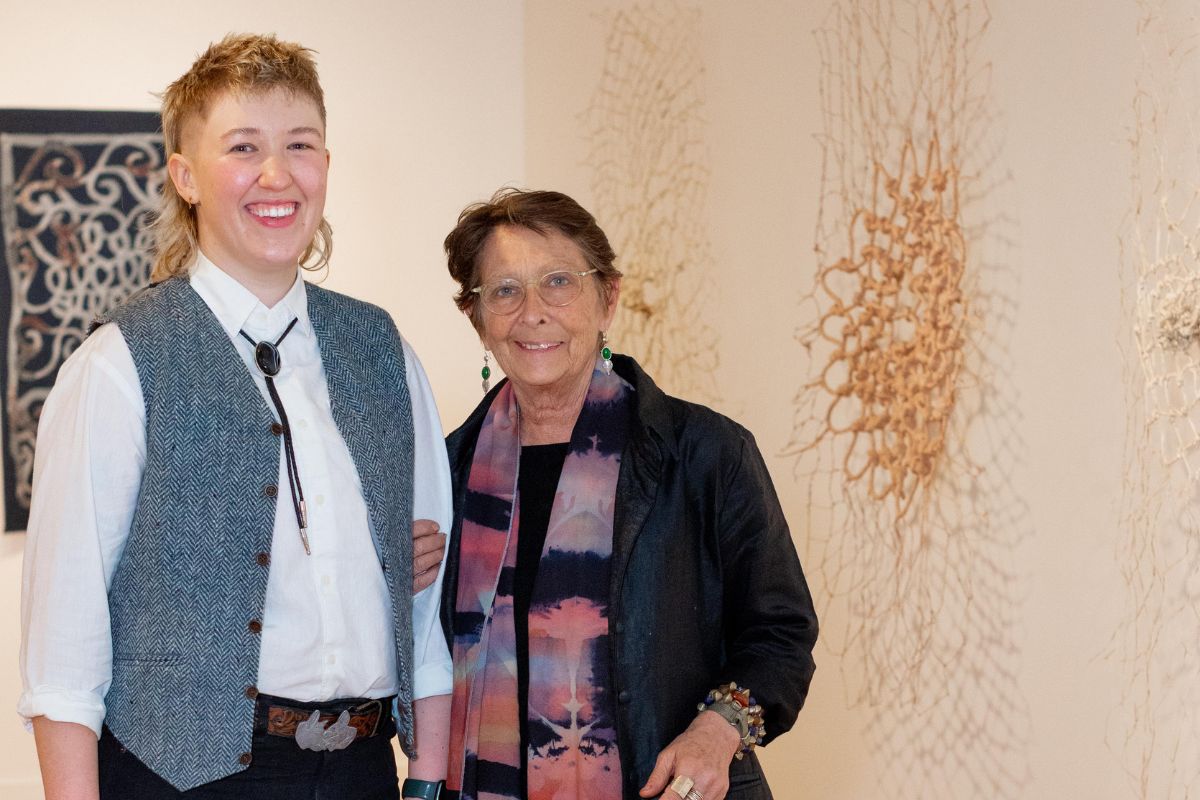
Noa Rickey ’26 was a research assistant in the Design Studies department’s hemp lab. They also worked as a production assistant for professors Mary Hark and Marianne Fairbanks and taught textile practices to UW–Madison students and community members.
At the end of their MFA program, Rickey’s passion for fiber arts was on display in the Ruth Davis Design Gallery. Their “Mothaígh Thú Uaim — Feeling You From Me” exhibition featured installations of nets and lace that examined the abstraction of grief and memory. Through large-scale works and small-scale lace, Rickey’s creations asked and answered questions like “How does time abstract the memories of a person long past?” and “Which images remain and which ones are left behind?”
Edward Xiong, Textiles & Fashion Design
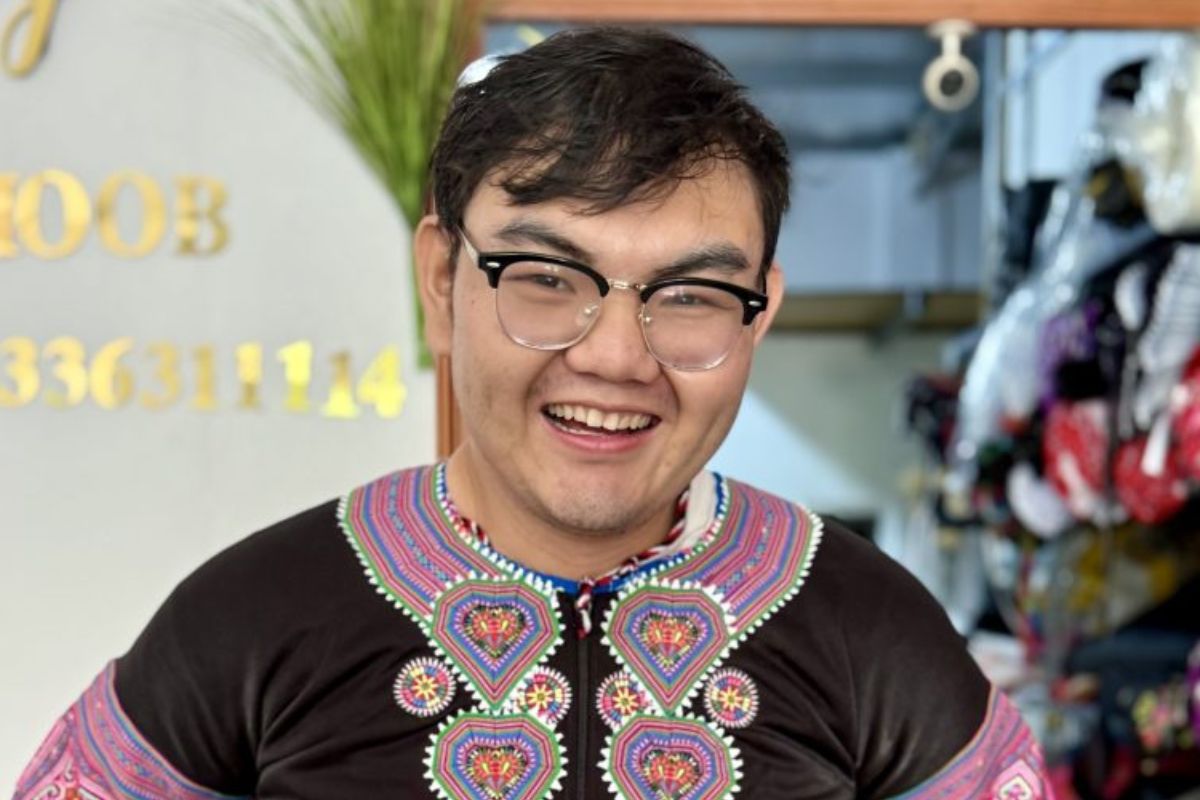
Edward Xiong ’26 spent six weeks in Vietnam as part of the inaugural Hmong Design Studies Internship led by professor Jennifer Angus. As a second-generation Hmong American, Xiong found it powerful to travel across Vietnam and collaborate with three distinct Hmong communities where he furthered his knowledge of weaving hemp and turning it into cloth.
Back stateside, Xiong worked as a guest speaker with the UW–Madison Asian American Studies Program, where he taught students how to sew traditional Hmong textile called paaj ntaub. Xiong created an effective guide and video tutorial for students to follow each step of the making process, ensuring supportive learning and connection.
By creating paaj ntaub, Xiong responds to questions of displacement, violence, trauma and memory: “Each stitch embedded into cloth serves as home-making for me,” Xiong says in his artist statement. “It is a form of expression that to me and my people holds memories and acts as an archive of kinship and resistance.”