
By Mike Klein
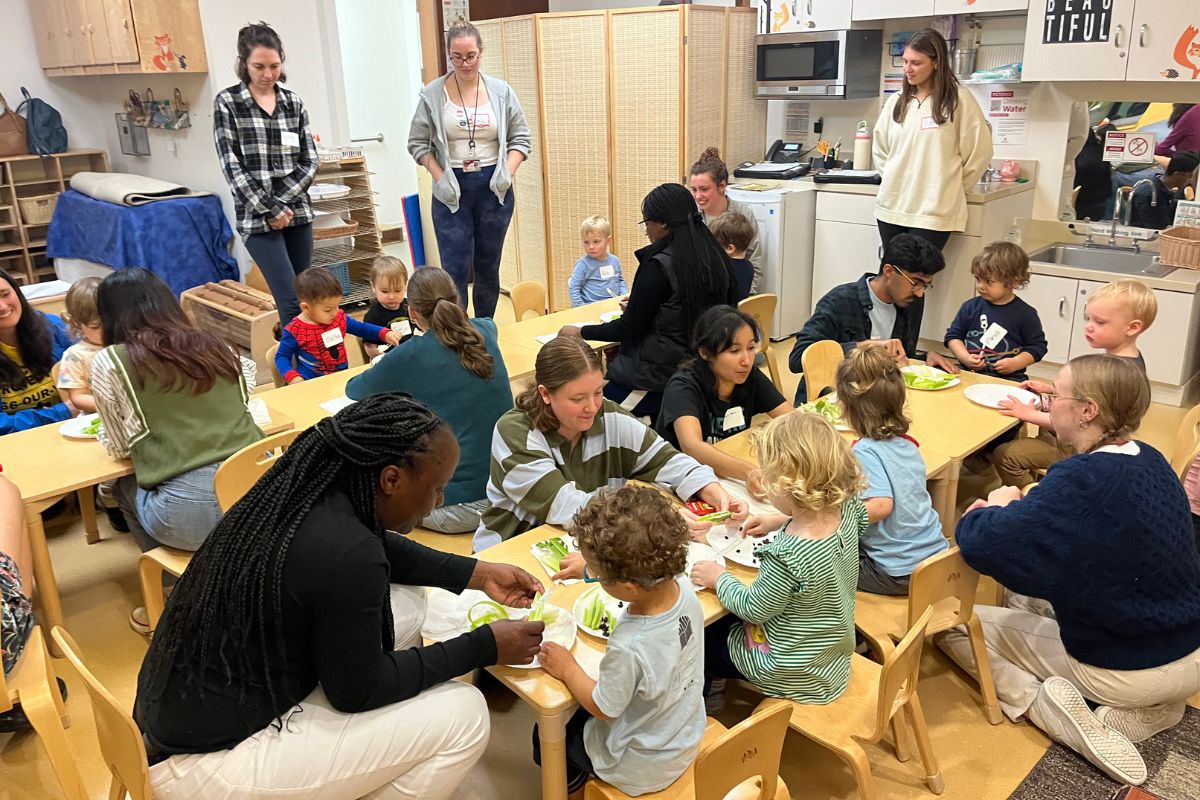
Picture the scene: 15 graduate students are paired with a class of 2-year-olds, one-to-one, to make “ants on a log,” a snack made with celery sticks filled with cream cheese and topped with raisins.
The healthy snack preparation activity was designed to improve cooperation and self-control among toddlers in the context of home visits for individual families. University of Wisconsin–Madison Human Development & Family Studies (HDFS) graduate students were trying to adapt the activity so it could also be used in group settings for multiple families or in childcare centers. To pilot the newly adapted activity, the graduate students went to the School of Human Ecology’s Child Development Lab (CDL).
“It was super fun. It was really loud, really chaotic, but in a good way,” says HDFS Professor Robert Nix, who directed the project as part of his Bridging the Gap Between Research and Action graduate seminar.
The experience was enlightening for the graduate students.
“I learned that working with multiple children at once can be challenging and a bit chaotic,” graduate student Elise Gurney says. “This realization prompted us to simplify our instructions, and to generally streamline the activity.”
The state-of-the-art facility, located within UW–Madison’s Nancy Nicholas Hall, combines an early childhood education center with spaces for multiple types of research.
There, students in disciplines ranging from education to child psychology to physical therapy can learn about child development by observing the behavior of children from infancy through 4K “in the wild” (their early childhood classrooms) using observation booths, or virtually through recordings on a secure platform used for UW–Madison courses.
In addition, instructors can partner with the lab to develop specialized learning experiences that involve working directly with the children, such as the “ants on a log” activity.
“Over the last decade, the Child Development Lab has delivered thousands of learning experiences for UW students across campus ranging from classroom observations to custom-designed course modules, making textbook concepts come to life through real-world application,” CDL Executive Director of Teaching and Research Amy Lee Wagner says.
“The real-world learning experiences the Child Development Lab provides are invaluable for students who plan to interact with or serve young children and families in their professional or personal lives — so, a lot of students!” CDL Faculty Director Heather Kirkorian says. Kirkorian is also the Laura M. Secord Chair in Early Childhood Development and an HDFS professor.
Providing a taste of real-world experience
The “ants on a log” activity also aimed to provide information about making healthy food to families who receive Women, Infants, and Children (WIC) and Supplemental Nutrition Assistance Program (SNAP) benefits. After piloting the activity at the CDL, the graduate students shared strategies with UW–Madison Extension educators to implement in their counties across Wisconsin.
Graduate student Gurney says the activity used two different strategies: describing to children what they are doing as they do it, and breaking tasks into smaller, more manageable parts.
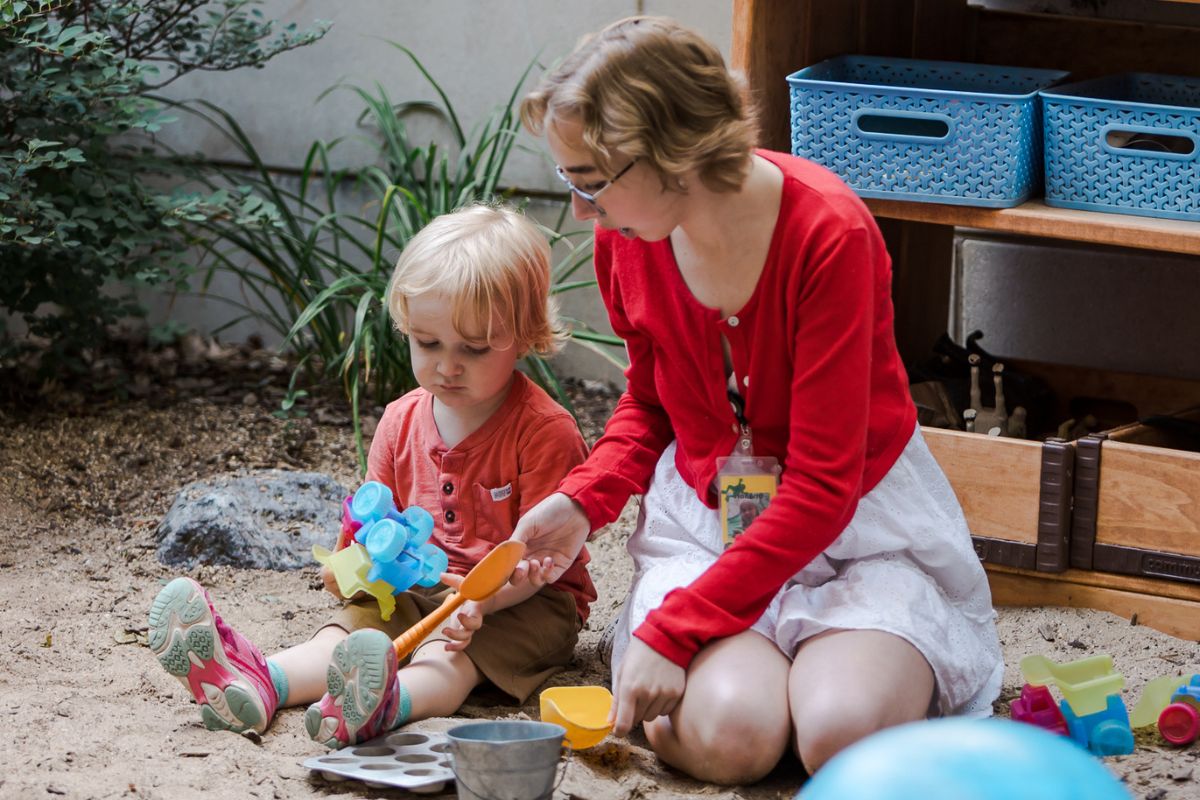
“Both of these strategies encourage kids to focus and persist, and to effectively manage their frustration, which are key components of self-regulation,” Gurney says.
Gurney, who is in her third year of the HDFS PhD program, found the lab visit invaluable.
“There are many things you simply can’t appreciate until you are able to interact with or observe children directly,” Gurney says.
Occupational and physical therapy students team up
Visits to the CDL also provide key educational opportunities for physical therapy (PT) and occupational therapy (OT) graduate students.
Teaching faculty member Natalie Blonien brings the students in her PT class on motor control dysfunction to the lab to observe typical development in a preschool setting. During these visits, the students collaborate on development observations.
“Usually there are four people in the observation room, two from each discipline,” Blonien says. “They were asked to observe the room and then also find one child that they were interested in spending more time observing collectively as a group.”
The students reflect together on their observations, which helps them learn interprofessional communication skills.
“It was neat for us to be able to take our coursework and in a standardized environment be able to use that clinician’s lens and actually consider how the child is moving,” PT student Mya Bunke says. She watched how infants laid on their backs or tummies, how they tracked objects with their eyes and how they interacted with the teachers.
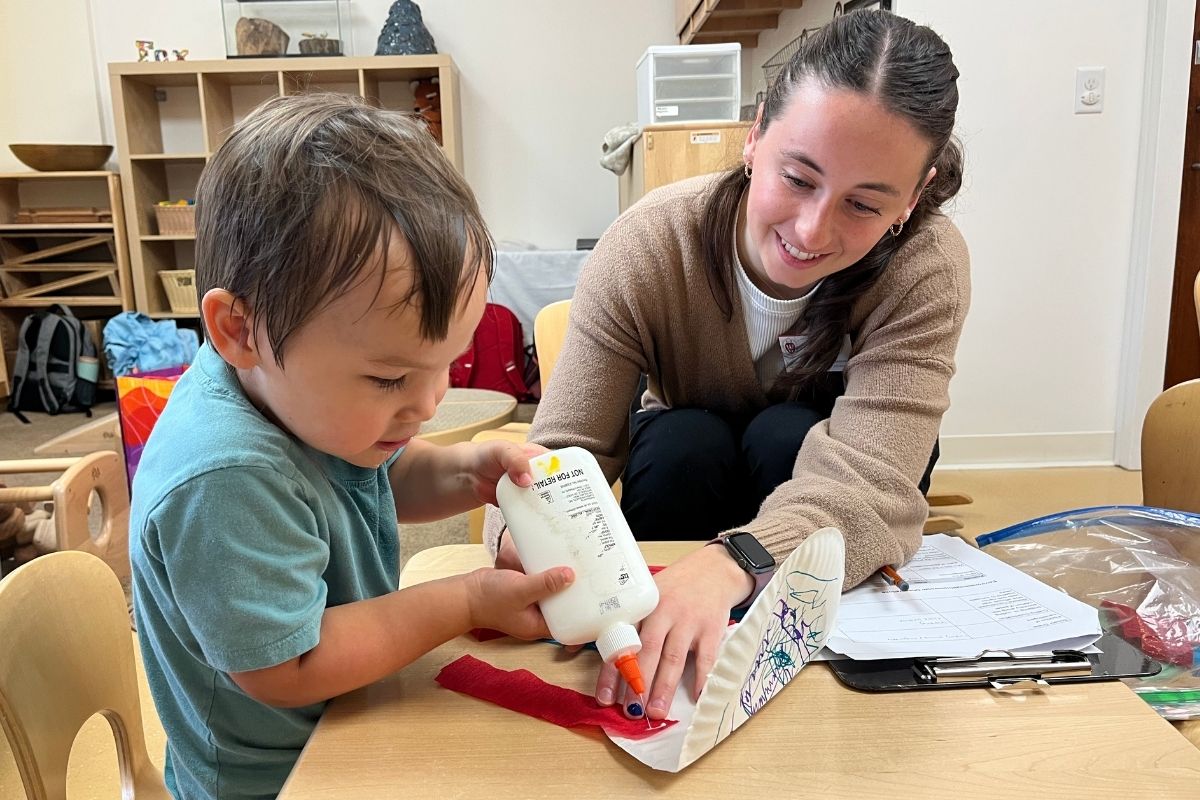
The OT students learn how to observe a child in their natural environment and use descriptive statements to describe the child’s fine and gross motor skills and their social and emotional skills, says Sarah Zurawski, an OT clinical assistant professor.
“I am a visual learner, so seeing the children do some of the things we talked about in class was helpful for my overall learning,” OT student Emma Hoffman says.
In addition to the observation booth work, Zurawski’s OT students work with preschool students in the lab on an art activity involving creating an octopus from paper. Then they assess the children’s hand skills based on how they hold the markers, manipulate the scissors and attend to the task.
Internships create invaluable experiences
The CDL also provides learning experiences by hiring student interns, who are assigned to teachers for mentoring over the course of a semester or summer. These paid internships are supported by generous donors.
“Our internship program gives students the opportunity to move beyond what they have learned in the classroom and experience what it truly means to work alongside children,” CDL Associate Director Katie Makowan says. “Through applied experiences, they begin to understand the many intricacies of child development and the intentionality that goes into supporting each child as an individual.”
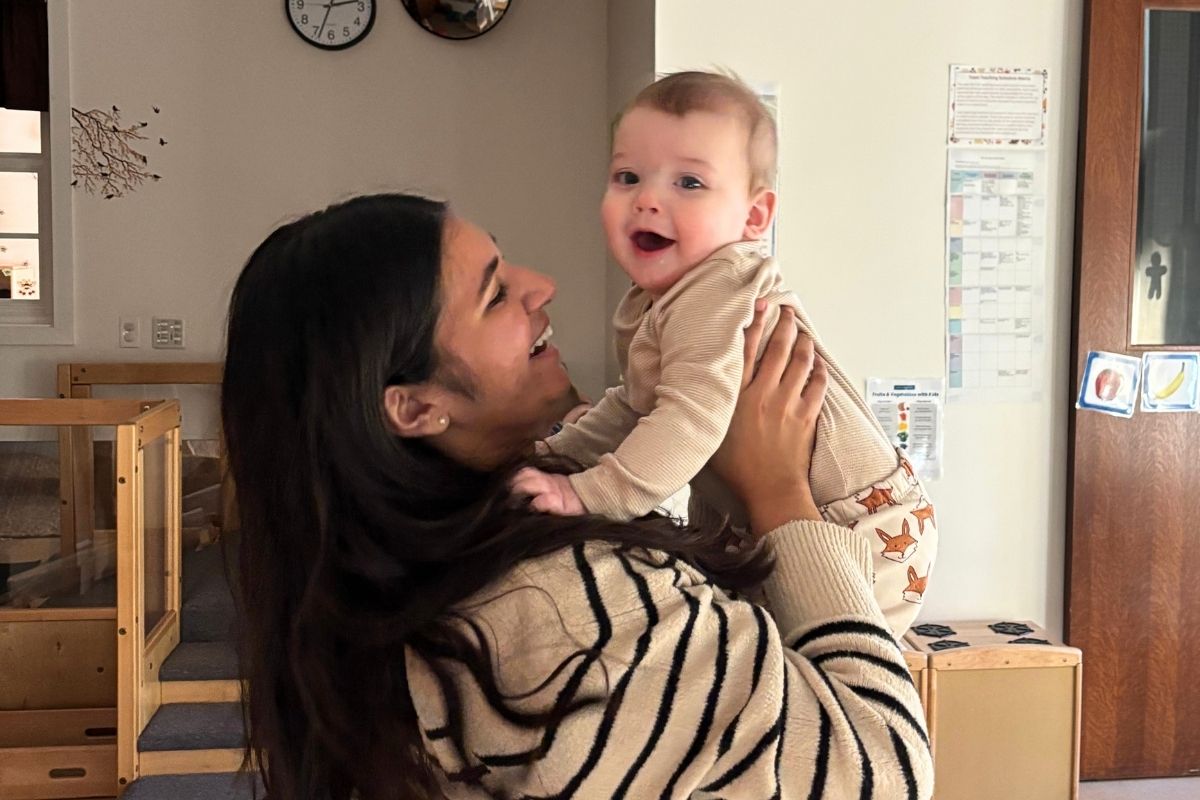
Sarina Shah started as a student assistant two years ago and completed her HDFS internship at the lab. She says her time there transformed her university experience. “I didn’t know anybody when I came here,” says Shah, who is from New York City. “Being in the Child Development Lab community made me like Wisconsin as a place.”
The lab’s teaching and research team also places up to 10 paid interns per semester at early childhood education programs in the community, with the help of funding from the Oscar Rennebohm Foundation.
Class visits for early childhood observations
UW–Madison students in a variety of fields tap into the CDL’s resources to enhance their learning about early childhood development.
For instance, Psychiatry Professor Kathleen Hipke brings her students who are doing a fellowship in child and adolescent psychiatry on a field trip to the lab to observe normative early childhood development.
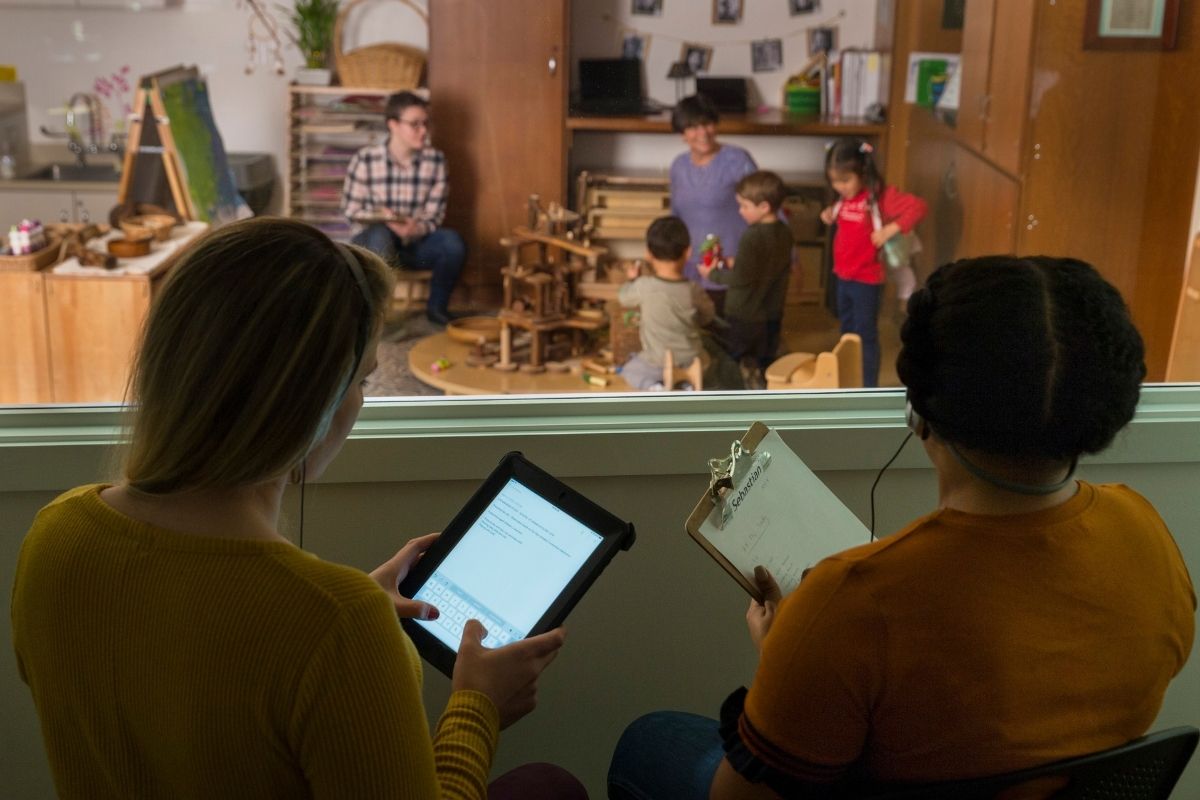
“Psychiatry fellows don’t usually get to see children who are very young in typical environments, and the Child Development Lab gives them that chance,” she says.
In addition, Hipke pairs up with fellows to provide child consultations at the lab. To give them an idea of the strengths and challenges of a child’s social emotional development, the pairs jointly interview parents and teachers and observe the child in the classroom and on the playground. They then share a report and any recommendations or strategies with teachers and families.
Rehabilitation Psychology and Special Education Professor Hailey Love brings her students in Overview of Early Childhood Special Education to visit the CDL. The students learn about the realities of early education from staff and observe classrooms and outdoor spaces.
“Students get to learn about inclusive, universally designed environments in a hands-on way and see how general early childhood programs can be inclusive of children from a variety of backgrounds and those with disabilities,” Love says.
Other instructors have their students tap into the library of pre-recorded videos in the lab’s virtual observation booth. These videos show specific types of behavior or interaction among young children.
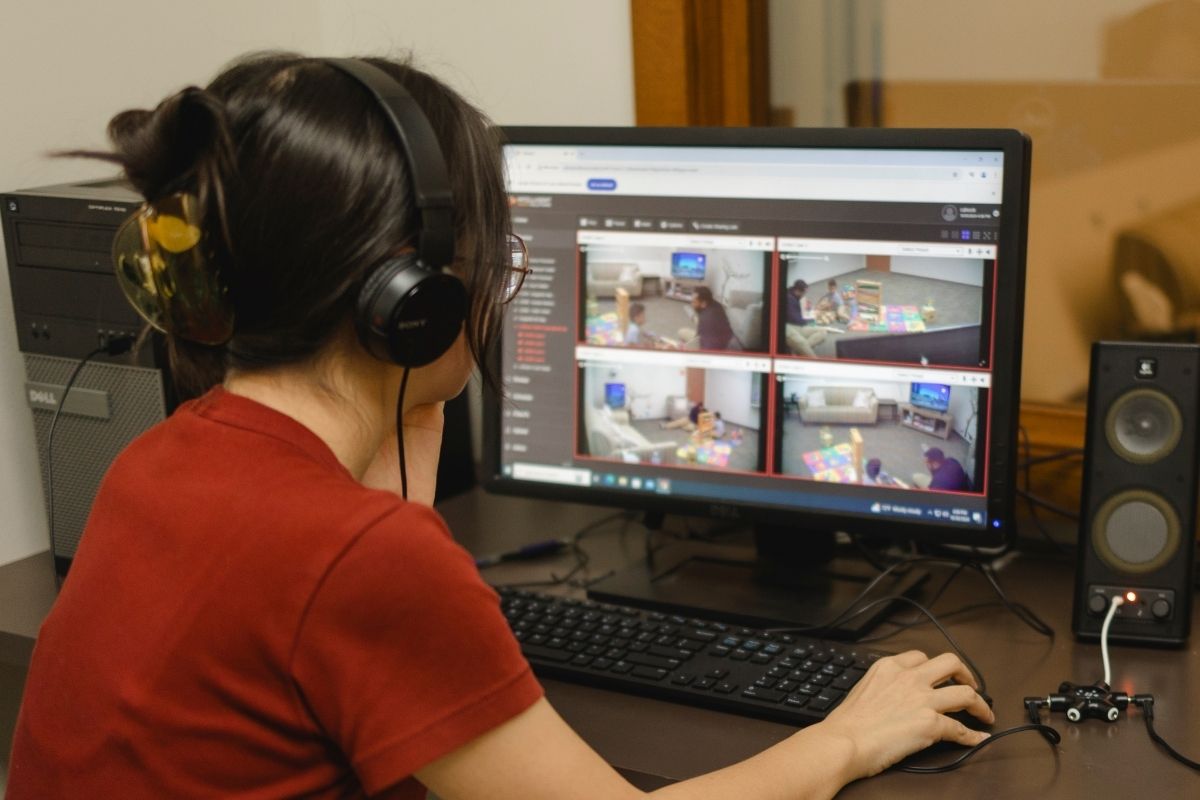
HDFS Associate Teaching Professor Claire Barrett says these videos are critical for her Development of the Young Child course, which is online and asynchronous. After viewing the videos, the students write virtual observation reports on child development during infancy and early childhood.
“It allows students the opportunity to asynchronously observe children and helps the students practice observational research skills, connect concepts from class to child development ‘in the wild’ and connect research to practice,” Barrett says.
Supporting research at every level
The CDL also helps facilitate research studies for student and faculty researchers across campus. Research studies are carefully reviewed and approved by the lab’s teaching and research team to ensure they are centered on the well-being of children and families and can be balanced with children’s daily routine.
Parents of children eligible for each study can decide to sign a consent form or opt out. Over the last nine years, the lab has hosted a number of graduate students’ dissertation research projects, and it recently provided support for a few undergraduate research projects.
Last spring, the lab piloted paid research internships for HDFS undergraduate students, expanding access to high-impact research experiences that help students build skills, confidence and professional connections.

Kirkorian, the CDL’s faculty director, says the lab teaches researchers, students and faculty alike how to study infant and early childhood development in ways that respect everyone involved, including children, parents and teachers.
“In this way, the Child Development Lab serves as an invaluable training ground for new researchers, helping them learn how to do ethical research with young children before starting new projects in the larger community,” Kirkorian says.
Read more about the Child Development Lab and its 100-year legacy of helping children and families thrive.